
Add Texture and Color to Your Landscaping!
“Fresh as a daisy,” “Turn over a new leaf,” ‘Sow the seeds,” ‘Beat around the bush.” These are just four examples of landscaping and gardening idioms that are used in our everyday jargon, showing nature’s relevance in our everyday lives! If you’re looking to give your garden and yard a little attention this summer, then adding texture and color are two easy ways to make an impressive difference. You will be “keeping up with the Joneses” in no time!
There are a number of principles to base your landscape design on including form, line, scale and arguably the two most important, texture and color. Knowing about basic landscape principles and color theory is indispensable to anyone wanting to up their game in the neighborhood with a successfully designed landscape.
Color Theory
Color theory is based on the color wheel in design. It is a standard circular illustration that demonstrates the relationship between all of the colors on the spectrum. The main four categories are:
Primary Colors: red, yellow, blue. Flowers with these color blooms are red tulips, red coleus, red salvia, yellow daffodils, marsh marigolds, black-eyed Susan, sunflower, blue scilla, grape hyacinth and bluebeard.
Secondary Colors: green, violet, orange. Some flowers with these color blooms are rose campion, purple verbena, trumpet vine, orange nasturtium.
Tertiary Colors: blends of the primary and secondary colors.
Neutral Colors: white and gray. Flowers with these colors blooms include white daffodil, star magnolia, queen Anne’s lace, dead nettle and lamb’s ears
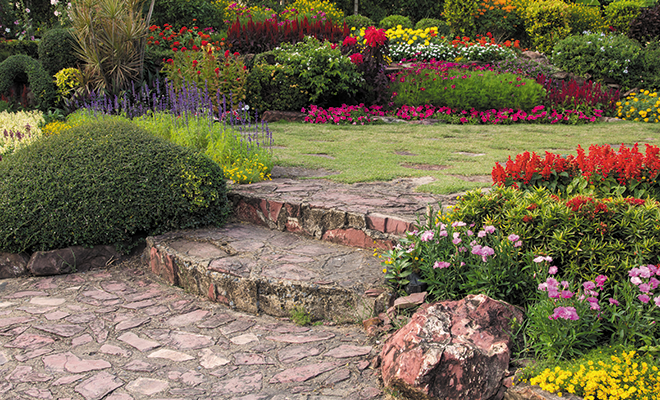
Using color theory as your guide will aid you in constructing a pleasing landscape design. This way you can choose colors that go together, which can be done in several combinations. A good way to divide the color wheel is by cool colors and warm colors. Cool colors are generally blue, purple and green and warm colors are red, yellow and orange. These color combinations impact viewers physically and mentally.
Texture
Beyond color, adding texture to your landscape design provides balance and depth. It also enhances undertones of existing plants and engages the senses. Plant textures come in many varieties ranging from delicate and fine to bold and coarse. Texture also means more than just the physical feel; it also serves as an eye-catcher in the space depending on how the plant interacts with lights and shadows. Texture provides depth and creates a multi-sensory experience for you and your family when walking through the space addressing sight, smell and touch.
The key to adding texture is to keep it balanced. Mix textures and combine plants that contrast each other such as a wide-leaf and small-leaf plant or a plant with blooming spikes and one with foliage.
Small Yard
If you have a small yard, combining warm and cool colors can change the perception of depth, giving the viewer an illusion of more space. Place warm-colored flowers in the foreground and position cool-colored flowers behind them. Start with the darker shades followed by shades that are lighter, creating the impression of depth. The feeling of having more space can also be created by placing large plants in the foreground and tapering off the size as you work your way in deeper.
Take bolder and coarsely textured plants and put them in the front. Layer those with medium-textured plants in the middle section and finish with finely textured plants in the back. This layered look tricks the eye into thinking the space is larger than it really is.
Big Yard
Contrastingly, if you have a larger space and want to create a feeling of intimacy, warm colors such as red can produce a smaller feel. This happens because warm colors appear to come forward in the landscape, making them seem closer than they are in reality. This illusion scales down the whole landscape, creating the feeling of intimacy. Bolder textures will make the plants appear closer than they are and finer textured plants will seem farther away.
Using Neutrals
Neutral colors soften the effect of big color schemes. All-white gardens called moon gardens consist of various shades of whites and creams, which can be especially enjoyed in the evening.
A simple way to add texture and color to your existing landscaping is to first look to see how much space is being taken up by leaves and flowers already and the patterns they already have; pair the existing ones with colors and textures that will pop. An easy example of doing this is if you already have multiple varieties of flowers in an area, consider adding darker-colored foliage to create a needed contrast.
Sources: totallandscapecare.com, thespruce.com and bhg.com.