

Hot Cars and Child Safety
We’ve heard the heartbreaking stories of a sleep-deprived parent, a hot car, an infant and a mistake that will haunt them for the rest of their life. In 2025, between March and October in states from California to Maine, 36 children from the ages of three months to nine years lost their lives in this manner. In 2026 already, two infants have died after unintentionally being left in a car.
The reality is that non-traffic child/car-related deaths are not limited to a child’s being left unattended in a vehicle. There are many dangers when it comes to kids and cars, but there are also steps we can all take to eliminate fatal outcomes.
According to Kids and Car Safety, roughly 2,400 child or infant deaths occur each year from non-traffic related accidents. Non-traffic incidents are injuries or deaths that occur in or around a vehicle; but take place off public roads or highways, mainly in parking lots or driveways.
These incidents include, but are not limited to, backovers, frontovers, heat stroke, power window strangulation or amputation, vehicles inadvertently knocked into gear, trunk entrapment, seat belt strangulation, vehicle submersion and underage drivers. Those statistics are on the decline thanks to legislation and increased public awareness, but there is still work to be done. The Hot Cars Act of 2019, reintroduced in the 117th Congress in May 2021, requires the Department of Transportation to “issue a final rule requiring all new passenger motor vehicles weighing 10,000 pounds or less to be equipped with an alert system to detect the presence of an occupant in a rear designated seating position after the vehicle engine is turned off.” In November 2021, President Biden signed into law the Infrastructure Investment and Jobs Act, in which the U.S. Department of Transportation is mandated to require a safety standard so all vehicles will automatically shut off if inadvertently left running.
Nevertheless, these warning signals can give drivers a false sense of security. Newer technology uses radar sensors that detect motion within the car. Some manufacturers have new interior radar systems that monitor the entire vehicle to ensure young kids and pets aren’t left behind. using a series of radar sensors in the overhead console, roof-mounted reading lamps and cargo area to detect even tiny movements throughout the car.
Some use systems in which the reminder is more effective after the driver attempts to lock the vehicle. If the driver tries to lock the vehicle while a child or animal is detected inside, the lock function is disabled and an alert is displayed on the center console screen. In some vehicles, the climate system will remain on when occupants are detected to reduce the risk of heatstroke or hyperthermia; however, the time may be limited based on vehicle battery life or specifications.
One technology company uses ultra-wideband technology to detect a child left alone in the vehicle cabin and sends out a warning within seconds. The existing sensor system can be repurposed to detect a car’s own radio signal bouncing back off objects inside the car. If something is moving even slightly, that indicates there’s something alive inside the parked car. The child detection technology relies on radio frequencies used to communicate with a smartphone as part of a phone-as-a-key system using radio signals and sensors.
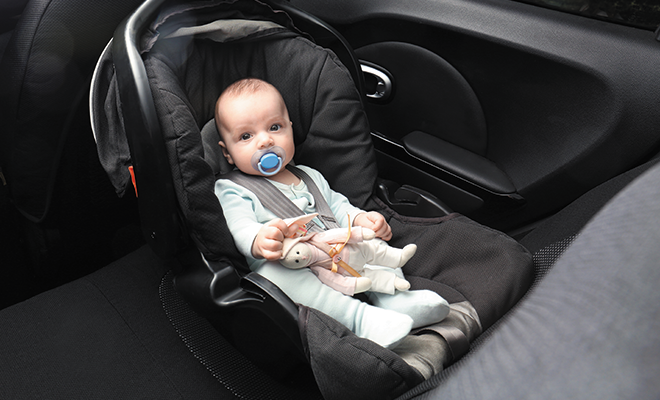
But parents or caregivers can take steps daily to form safe habits. The Look Before You Lock mantra is shared as education cards for new parents that have been distributed to hospitals and birthing centers nationwide to help educate parents at the beginning of their child’s life. Leaving items such as purses or briefcases in the backseat next to their sleeping child can jar memories and prevent fatal mistakes. Other suggestions are to leave a stuffed animal in the car seat and place it in the front after strapping the child in the car seat. Keys and remote openers should never be left within reach of children; car doors should be locked at all times.
Backover accidents account for around 42 percent of all non-traffic related auto fatalities involving children each year and frontovers account for another 22 percent. Sadly, most of the time it’s a relative behind the wheel, often a parent, who runs the child over with the family vehicle. When backing out of or entering a driveway or garage, take note where the child is at all times. Kids are low to the ground and many of today’s vehicles are large enough to have blind spots on all four sides. Have someone else hold infants or toddlers and have younger children stand in a safe zone, such as a front step or inside a porch, to make sure they are in eyesight at all times.
By being aware and working together, everyone can strive for zero accidents and deaths for children.
Sources: continental.com, cars.com, keepyourchildsafe.org, kidsandcars.org, washingtonpost.com and autonews.com.