
Fancy Fruits
By Sherry L. Granader
A stroll through the produce section at your local grocery store may give you the impression there is plenty of fruit to select from. However, the world is full of fancy fruits that you may not have seen or tasted yet. Apples, oranges, grapefruits and bananas might seem ordinary after you have sampled some of the more fancy fruits available.
When you need something refreshing or want to sample some exotic fruit, consider the following fruits.
Blood Orange
The pigment that gives these oranges their name comes from the phytonutrients found in these and other red fruits and flowers. Blood oranges are often a little smaller than regular Valencia oranges and vary in color inside from pink to burgundy, having a somewhat sunset-like skin or peel. They should be firm to the touch with a heavy feel that means they are full of juice and will keep well in the refrigerator for at least two weeks.
Blood oranges add a splash of color to any fruit salad, a delicious twist to a cocktail and create amazing sauces, sorbets and marmalades. An Italian favorite made with blood orange segments is tossed with fennel, parsley and olive oil, plus the juice of the blood orange makes excellent vinaigrette. Blood oranges are a great source of antioxidants, vitamin C and fiber. The rich-colored fruit has been shown to reduce the risk of heart disease, some types of cancers and lower LDL (bad) cholesterol. Plus, they may reduce the risk of developing cataracts. Look for them at your local farmers’ market, as the selection may be limited at your grocery store.
Pomegranates
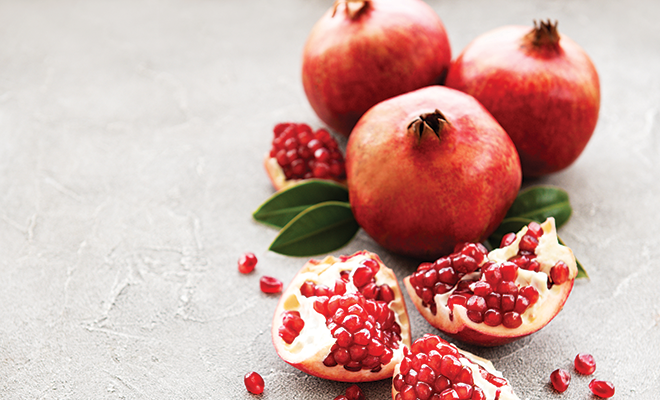
These intriguing fruits are nutrient dense, full of antioxidants and have long been known as the symbol of health, fertility and eternal life. The pomegranate is a red fruit with a tough outer layer; only the juice and seeds inside are edible. To eat a pomegranate, cut the crown off at the protruding blossom end. Cut the fruit into quarters and immerse them in a large bowl of cold water. Separate the seeds from the membrane and let the seeds sink to the bottom. Discard the membrane and the skin, draining the seeds on a paper towel.
Many grocery stores offer pomegranates from September through January; they will keep in the refrigerator for up to two months. The juice is available year-round, usually in the produce department or gourmet juice section. Pomegranate seeds add a bright colorful crunch with incredible nutrition to a salad. Their potent antioxidants offer protection against heart disease and cancer. One glass of pomegranate juice has more antioxidants than green tea, blueberries, cranberries or red wine. This amazing fruit has been shown to lower blood pressure and cholesterol and reduce the risk of developing breast, prostate, colon cancer, leukemia and stroke. It can even increase the rate of speed at which heart blockages (atherosclerosis) melt away, reducing plaque. It is one of the most powerful, nutrient-dense foods for overall good health on the planet.
Mangosteen
This edible fruit is about the size of a tangerine, with a thick, dark purple rind and sweet white pulp. It comes from the mangosteen tree, native to Southeast Asia, and has been used to maintain good health since 600 CE. It is rich in xanthones, powerful antioxidants that support a healthy cardiovascular system and help lower C-reactive protein levels, a marker of heart health. It is known as the “Queen of Fruits” thanks to Queen Victoria, who offered the reward of knighthood to anyone who could bring her the fruit in perfect condition. The fruit is sweet and tangy, with a citrus-peach taste and texture.
Unfortunately, mangosteen fruit is not readily available in the U.S. except for some Asian markets, where you will pay a pretty penny for them. They grow only in tropical climates but cannot tolerate temperatures over 100 degrees or below 40 degrees. If you are going to drink the juice, look for a beverage that uses the whole fruit, rind and all, to reap the health benefits.
Star Fruit
Native to Indonesia, India and Sri Lanka, the star fruit can usually be found in most grocery stores in the U.S. This golden-yellow fruit is sweet, crunchy and tastes like a combination of apples, pineapples and kiwi. It can be very juicy and is rich in vitamin C. In fact, some people make wine out of the fruit.
Kumquats
Kumquats resemble oranges in a small form and grow on trees. They are eaten raw and are often used to make jelly and marmalade. The juice of a kumquat can be added to hot tea, plus it makes a great remedy for sore throats when boiled and served hot on its own.
Be adventurous, expand your taste buds and reap the health benefits with these fancy fruits at your next meal.
Sources: exoticfruitclub.com and travelandleisure.com.